












Spirit of Fuerteventura welcomes you on their page “People & History” where you can find info on different topics like local celebrities – actual or past – and history of the island.

 The Canarian Pastor (or Shepherd's) Leap is a tradition of the Canarian Islands and consists of using a long wooden pole to cross the countryside and to jump over gulley’s and cliffs. The origins of salto del pastor may date back to the Guanches, the aboriginal inhabitants of the islands prior to the Castilian conquest period of the early 15th century. In the past all kinds of people used this pole to walk across the fields, but recently it is only used by shepherds. There are initiatives to revive this kind of country-walking and to include it in local competitions. The Canarian Pastor (or Shepherd's) Leap is a tradition of the Canarian Islands and consists of using a long wooden pole to cross the countryside and to jump over gulley’s and cliffs. The origins of salto del pastor may date back to the Guanches, the aboriginal inhabitants of the islands prior to the Castilian conquest period of the early 15th century. In the past all kinds of people used this pole to walk across the fields, but recently it is only used by shepherds. There are initiatives to revive this kind of country-walking and to include it in local competitions.
Read more... Add new comment Hits: 6748
|
|
|
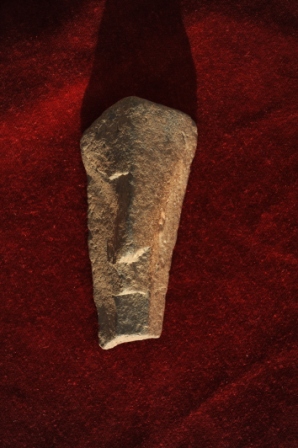
 It is not unusual on Fuerteventura to find stones with strange shapes, gouges and lines clearly seen on them. Legend has it that these were forms of art from the stone age when the island was inhabited by the original settlers – the guanches . There are many relics on all of the Canary Islands of their existence but as of now the legend of the mysterious stones is still unsolved.
 One can find remnants of the stone-age culture of the Guanches, only scarcely mentioned in history books, all over the island. Majos, Canarios, Auaritas, Bimbaches, Gomeros - all of them have left their traces on the Canary Islands - but little is known about their origin.
 This picture of a farming group from the late 1950s appear as a rural scene and when you look behind them you will see a grand marble angel. This statue can be seen as you go past the cemetery at La Oliva, in the North of the island. The farming group is standing in what is now the cactus garden, opposite the petrol-service station in La Oliva. This cemetery is less than inspiring with very little info. Nowadays the coffin is placed in a wall and bricked up but there are many traditional graves. One of the most interesting and the most ancient ones lies
 One of the constructions tourists frequently wonder about are the strange round structures all over the island that now are abandoned. Some are quite fantastic and apparently they seem to have played an important part in the former economic activity of Fuerteventura.
 Pájara is one of the oldest towns in Fuerteventura and was a very early settlement from Betancuria. It survived complete destruction during the Arab invasion of 1593 when all of Betancuria was reduced to dust. The town takes its name from the hen pheasant, as the coat of arms shows. Look carefully and you will see a very ancient symbol, the 2 serpents. These have been slightly adapted but are named Oroborus or tale devourer. It shows a snake eating its own tale, which has a mystic meaning of “the circle of death and re-birth”, which is thousands of years old.
 The estimated age of Fuerteventura as an island is some 18-20 million years. The earliest formation is thought to be Tindaya, reckoned by its material which differs significantly from that of the rest of the island. The mountain Tindaya is a large lump of Trachite, whereas the Betancuria massif is Basalt based. One million years is along time and although not populated by humans, Fuerteventura was the home to many species of plants and animals that we will never guess how they looked or grew. However, there is one instant that has left its traces.
 The Canary Islands had been known for many centuries and have been visited by the Phoenicians, Romans, Carthaginians, and Egyptians and very much later by the Portuguese. The original inhabitants of Fuerteventura remained in between isolated from Europe and the rest of the world for almost 1500 years.
Spirit of Fuerteventura - Ed 27
Welcome to the Edition 27 of the Spirit of Fuerteventura Holiday, Trip & Travel Guide + Sport, Activity & Excursion Advisor. On this page you will find all the navigation facilities to bring you to the information contained in this edition.
Enjoy your reading. The Spirit Team.

 |
Spirit of Fuerteventura pages at Facebook |
World Cup 2012 Fuerteventura - Windsurfing & Kiteboarding.
World Cup 2012 Fuerteventura - Windsurfing & Kiteboarding: Picture Report. (by Charly Lang). Ki...
Fuerteventura en Música 2012 - El Cotillo, Fuerteventura.
Fuerteventura en Música 2012 - Foto Impressions (by Charly Lang). All pictures...
Fiesta San Juan 2012 - Cofete - Fuerteventura.
Fiesta San Juan 2012 - Cofete, Fuerteventura. Foto Impressions - Impresiones fotográficos - Bildere...