











Spirit of Fuerteventura welcomes you on their page “Nature & Science” where you can find info on different topics like ecology, local flora and fauna, etc and on scientific topics.
 |
| 
Shooting Stars over Fuerteventura!
There are still a couple of events on earth that are for free: rain, wind, sunrise, sunset... and shooting stars! In the second half of the year they are prominent and Fuerteventura allows you to take maximum advantage of it, as you can easily find a dark place.
Orionids Meteor Shower - October 21, 22. With the waxing crescent moon setting before midnight (on October 20), that means a dark sky between midnight and dawn, or during the best viewing hours for the Orionid meteors. On a dark, moonless night, the Orionids exhibit a maximum of about 15 meteors per hour. These fast-moving meteors occasionally leave persistent trains and bright fireballs.
Leonids Meteor Shower - November 16-18. The Leonids is one of the better meteor showers to observe, producing an average of 40 meteors per hour at their peak. The shower itself has a cyclic peak year every 33 years where hundreds of meteors can be seen each hour. The last of these occurred in 2001. The shower usually peaks on November 16-18, but you may see some meteors from November 13-20.
December 13, 14 - Geminids Meteor Shower. Considered by many to be the best meteor shower in the heavens, the Geminids are known for producing up to 60 multicolored meteors per hour at their peak. The final major meteor shower of every year (unless one surprises us!) is always the December Geminid shower, often producing 50 or more meteors per hour. It is a beloved shower, because, as a general rule, it’s either the August Perseids or the December Geminids that give us the most prolific display of the year. (Note: the 2012 Perseids were rather weak).
There are still a couple of events on earth that are for free: rain, wind, sunrise, sunset... and shooting stars! In the second half of the year they are prominent and Fuerteventura allows you to take maximum advantage of it, as you can easily find a dark place.
Orionids Meteor Shower - October 21, 22. With the waxing crescent moon setting before midnight (on October 20), that means a dark sky between midnight and dawn, or during the best viewing hours for the Orionid meteors. On a dark, moonless night, the Orionids exhibit a maximum of about 15 meteors per hour. These fast-moving meteors occasionally leave persistent trains and bright fireballs.
Leonids Meteor Shower - November 16-18. The Leonids is one of the better meteor showers to observe, producing an average of 40 meteors per hour at their peak. The shower itself has a cyclic peak year every 33 years where hundreds of meteors can be seen each hour. The last of these occurred in 2001. The shower usually peaks on November 16-18, but you may see some meteors from November 13-20.
December 13, 14 - Geminids Meteor Shower. Considered by many to be the best meteor shower in the heavens, the Geminids are known for producing up to 60 multicolored meteors per hour at their peak. The final major meteor shower of every year (unless one surprises us!) is always the December Geminid shower, often producing 50 or more meteors per hour. It is a beloved shower, because, as a general rule, it’s either the August Perseids or the December Geminids that give us the most prolific display of the year. (Note: the 2012 Perseids were rather weak).
Add comment
|
|
| Walking - Hiking & Mountain Biking |

Spirit of Fuerteventura - Ed 29
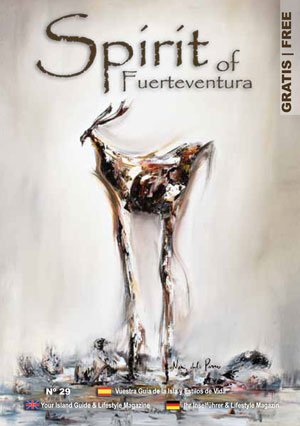 Welcome to the Edition 29 of the Spirit of Fuerteventura Holiday, Trip & Travel Guide + Sport, Activity & Excursion Advisor. On this page you will find all the navigation facilities to bring you to the information contained in this edition.
Enjoy your reading. The Spirit Team.


BIDI: Scan this QR-Code to get your FREE Fuerteventura Guide for Smartphones & Tablets! If you don't have the scanning program yet, download it for free from www.getscanlife.com
 |
Spirit of Fuerteventura pages at Facebook |