Posted in POF North
Print
Email
For those who want to learn more about the locals and their culture, find below a list of the most important sources of information, like museums and monuments:
Museums:
La Oliva – Museo del Grano: agricultural museum about the history, tools and techniques how to grow and harvest grain.
Villaverde – Cueva del Llano: impressive ancient volcanic lava tube. Take this opportunity to sense the effect of complete darkness and silence.
Continue Reading
Posted in POF North
Print
Email
Fuerteventura is famous for its beaches and as mentioned before in all there are approx 152. Apart from those that are directly accessible by foot from your hotel you will find that most are deserted from people and devoid of the usual rows of deckchairs and umbrellas. On these beaches you have the pleasure of choosing your own secluded spot and that it will remain yours for as long as you are there.
Continue Reading
Posted in POF North
Print
Email
Corralejo – town.
Corralejo is one of the busiest tourist areas on the island, during the day and during the night. You may split Corralejo into 3 main areas: the north with its old town centre, the middle that has been built over the last 20 years and the south that has been developed recently. Places to visit are: the main street with a lot of shops, the Hoplaco Complex, the old town with its numerous bars and restaurants, the harbour area and a bit further the seaside promenade with very nice views to Lanzarote and Lobos.
Continue Reading
Posted in General Travel Guide
Print
Email

The centre of Fuerteventura has economically two major areas: the capital and the recently built tourism and golf centre Castillo or Caleta de Fuste. The centre of Fuerteventura is very diverse in geography, history and economic activity. The most important villages/towns are:
Caleta de Fuste, Ajuy, Antigua, Tefia, Los Molinos, Betancuria, Puerto del Rosario
Continue Reading
Posted in General Travel Guide
Print
Email

The North of Fuerteventura was the first area on Fuerteventura to be developed for tourism in the early 60'ties. Ideal surfing conditions, splendid beaches and an existing infrastructure - although primitive at that time - were the decisive elements. The North of Fuerteventura is home to the following interesting villages:
Corralejo, El Cotillo, Lajares, Villaverde, La Oliva, Tindaya, Vallebrón.
Continue Reading
Posted in General Travel Guide
Print
Email

The South of Fuerteventura was the last area to be developed as a tourist area on the island as there was a need to create an infrastructure first. Nowadays, it represents the most important tourist area of Fuerteventura with sandy beaches, optimal surfing conditions and plenty of recreational and nightlife possibilities. The most important villages are:
Costa Calma, Jandía, Morro Jable, Gran Tarajal, La Pared, Pájara
Continue Reading
Posted in General Travel Guide
Print
Email
.JPG)
Introduction to Fuerteventura.
When you circle above Fuerteventura to prepare for landing and when you only focus on the land below you, you will see a completely barren area with no visible vegetation and you might think that you’re about to land on Mars. And when you are transferred from the airport to your hotel the views you capture from your bus seat may confirm your first impression and raise the inevitable question “Is this a holiday destination?”
Continue Reading
Posted in Spirit Stops (TM) Program
Print
Email
Spirit Stops™ is an initiative from “Spirit of Fuerteventura”, the quarterly magazine about the beautiful island Fuerteventura, and has the objective to inform the visitor about the most interesting places to visit. These places can be nice spots along the road or in the wild and untouched nature, but they also can be accommodation, places to eat out, bars and shops that have something special to offer. Places that might stay in your memory for some reason, whether it is due to exclusivity, originality, service, typical flavour or unsophisticated but good value-for-money. Spirit Stops™ is NOT a quality label, but merely a travel & trip advisor on where to go in order to facilitate your search for “that particular spot” on Fuerteventura.
We hope that we succeed in our goal and wish you a happy holiday and a lot of fun.
Posted in Spirit Stops (TM) Program
Print
Email
Spirit Stops™.
Many visitors and residents from both ends of Fuerteventura love to explore this beautiful island and sometimes have difficulty to fully enjoy the local offerings at the other end as they return to base the same day. Searching for appropriate accommodation to stay overnight is bothersome. Also finding the “hot spots” and “insider tips” in catering and pleasure can be time-consuming.
Spirit Stops™ provides information about good value-for-money accommodation, catering and events to people who want to get the maximum out of their journey without stressing their wallet. To benefit from special conditions you just mention “Spirit” or “Spirit Stops™” when you make your reservation.
Spirit Stops™ also is a web-based platform where you can upload your most beautiful and representative pictures of your holiday on the island. Once in a month/quarter the best ones will be selected and they will be published on the www.spiritoffuerteventura.com web site. Join us in making Fuerteventura even more exciting!
Posted in Timetables
Print
Email
Fuerteventura Tides 2020: full-year tide table 2020 for Fuerteventura:
Posted in Timetables
Print
Email
Please find below the Timetables for Buses - Fuerteventura:
Posted in Timetables
Print
Email
Please find below the Time Tables for Ferries - Fuerteventura:
Time Table Ferry - Fuerteventura:
Posted in Maps
Print
Email
Download this Costa Calma City Map with all useful information about supermarkets, ATM cash dispensers, taxis, pharmacy, medical centres, police, postoffice, bus stations, etc

Posted in Maps
Print
Email
Click on Images to enlarge
Navigate to lower right corner to close enlarged image
Posted in Maps
Print
Email
Click on Images to enlarge
Navigate to lower right corner to close enlarged image
Posted in Maps
Print
Email
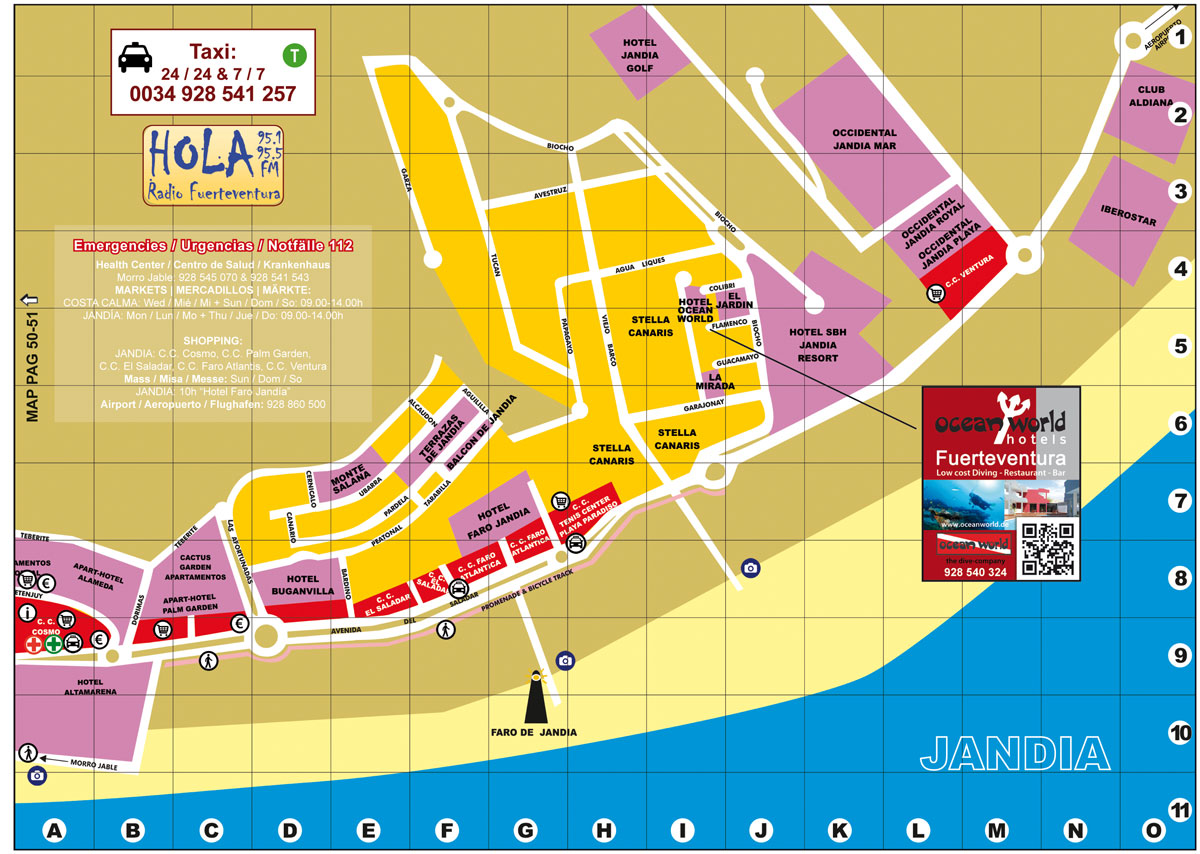
Download this Jandia City Map with all useful information about supermarkets, ATM cash dispensers, taxis, pharmacy, medical centres, police, postoffice, bus stations, etc
Posted in Maps
Print
Email
Fuerteventura Map:
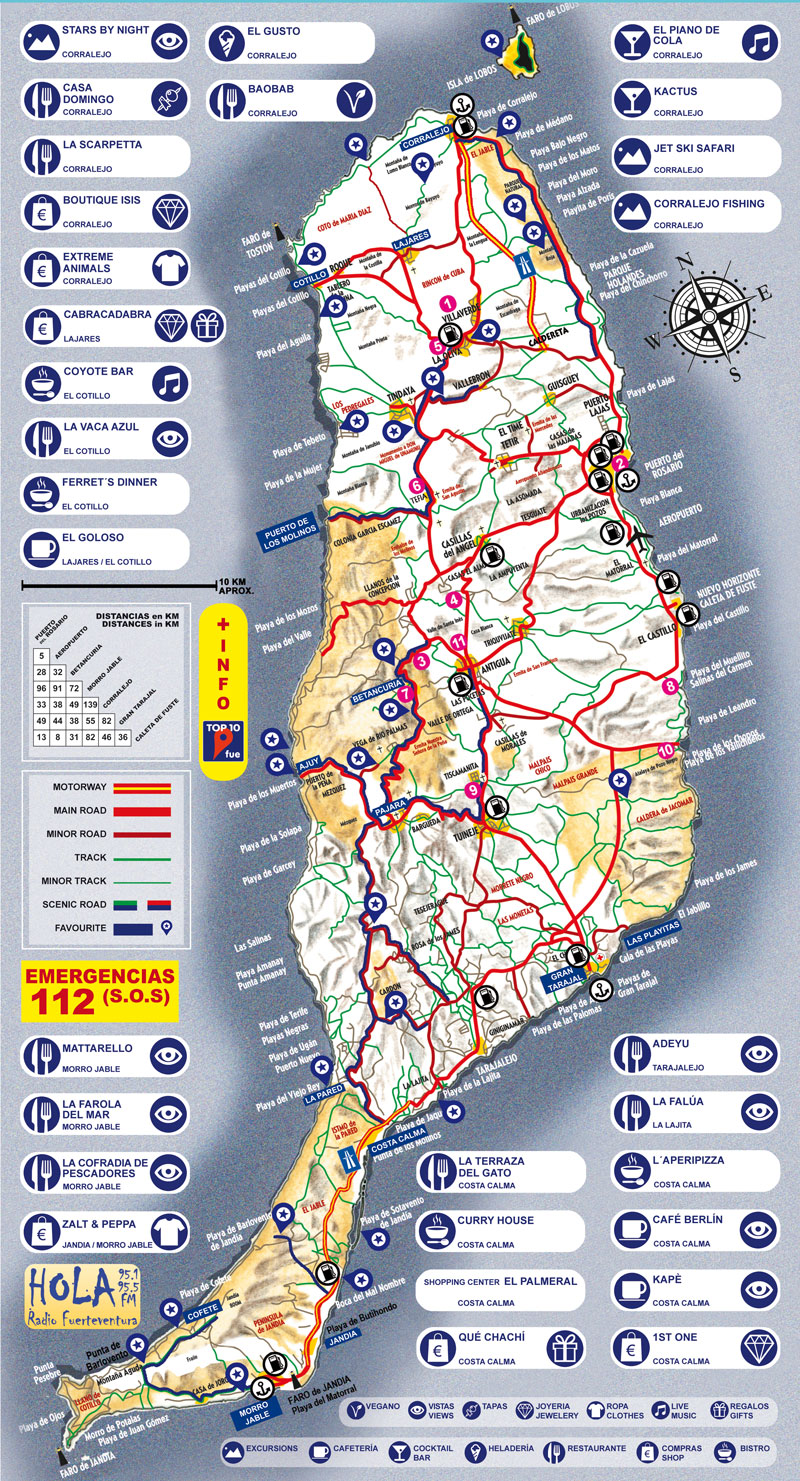
Download this map with plenty of information about the Fuerteventura Top 10 favourites per region to visit: Fuerteventura - North, Centre and South.
Posted in Maps
Print
Email
Download this Corralejo City Map with all useful information about supermarkets, ATM cash dispensers, taxis, pharmacy, medical centres, police, postoffice, bus stations, etc

Posted in Maps
Print
Email
Download this Morro Jable City Map with all useful information about supermarkets, ATM cash dispensers, taxis, pharmacy, medical centres, police, postoffice, bus stations, etc

Posted in Visions of Fuerteventura
Print
Email
Find here a collection of images of Fuerteventura that show you hidden places, typical areas, amusing shots and that somehow represent the "Spirit of Fuerteventura".
Click on image to enlarge - navigate outside of image to close
Posted in POF South
Print
Email
Intro
Fuerteventura South: Costa Calma, Jandía, Morro Jable, La Pared
Posted in POF South
Print
Email
Chilling out on Fuerteventura’s beaches is a marvellous experience, but if you may feel the need to visit some nice spots in nature, then the suggestions below can help you in making a selection.
Continue Reading
Posted in POF South
Print
Email
For those who want to learn more about the locals and their culture, we supply below a list of the most important sources of information, like museums and monuments:
Museums:
Los Molinos – Tiscamanita: a historic review on what was used as milling components.
La Atalayita – Pozo Negro: reconstruction of one of the first settlements on Fuerteventura. Impressive how these people could survive in such harsh conditions.
Places:
Morro Jable Harbour – Turtle breeding station: watch the turtle babies being cared for by locals till they can face the “world outside”.
Posted in POF South
Print
Email
Fuerteventura is famous for its beaches and as mentioned before in all there are approx 152. Apart from those that are directly accessible by foot from your hotel you will find that most are deserted from people and devoid of the usual rows of deckchairs and umbrellas. On these beaches you have the pleasure of choosing your own secluded spot and that it will remain yours for as long as you are there.
Continue Reading
Posted in POF South
Print
Email
Las Playitas – town.
Las Playitas is a typical fisherman’s village. It is built on the slope of a hill and overlooks the sea. You can stroll in the quiet streets and enjoy the tranquillity of the town. At the shore there are two restaurants where they serve fresh fish and meat.
Continue Reading
Posted in POF Centre
Print
Email
Chilling out on Fuerteventura’s beaches is a marvellous experience, but if you may feel the need to visit some nice spots in nature, then the suggestions below can help you in making a selection.
Road Antigua-Betancuria-Pájara – Mirador “Morro Velosa”: the road to Betancuria is a typical “serpentine” road through the mountains. Superb views over the North of the island. Stop at the parking lots and watch the squirrels come to you for food.
Continue Reading
Posted in POF Centre
Print
Email
For those who want to learn more about the locals and their culture, we supply below a list of the most important sources of information, like museums and monuments:
Museums.
Puerto del Rosario – Casa Unamuno: home of the famous and banned writer Unamuno, who fell in love with Fuerteventura.
Puerto del Rosario – Centre of Art “Ismael”: contemporary art museum.
Tefia – La Alcogida: museum about the ancient local agricultural life.
La Ampuyenta – Casa Dr. Mena: small but cosy museum about local objects.
Caleta de Fuste – Museo de la Sal: salt museum where you can learn how inventive the ancient locals were to harvest salt from the sea. This salt was then shipped to mainland Spain.
Antigua – Molino de la Antigua: restored windmill, a craft shop, gardens with indigenous plants and a permanent exhibition on archaeological findings.
Betancuria – Archaeology Museum: exhibition about the culture of the ancient locals and about the first expeditions to Fuerteventura. (Temporarily closed due to construction)
Continue Reading
Posted in POF Centre
Print
Email
Fuerteventura is famous for its beaches and as mentioned before in all there are approx 152. Apart from those that are directly accessible by foot from your hotel you will find that most are deserted from people and devoid of the usual rows of deckchairs and umbrellas. On these beaches you have the pleasure of choosing your own secluded spot and that it will remain yours for as long as you are there.
Continue Reading
 EN
EN  DE
DE  ES
ES